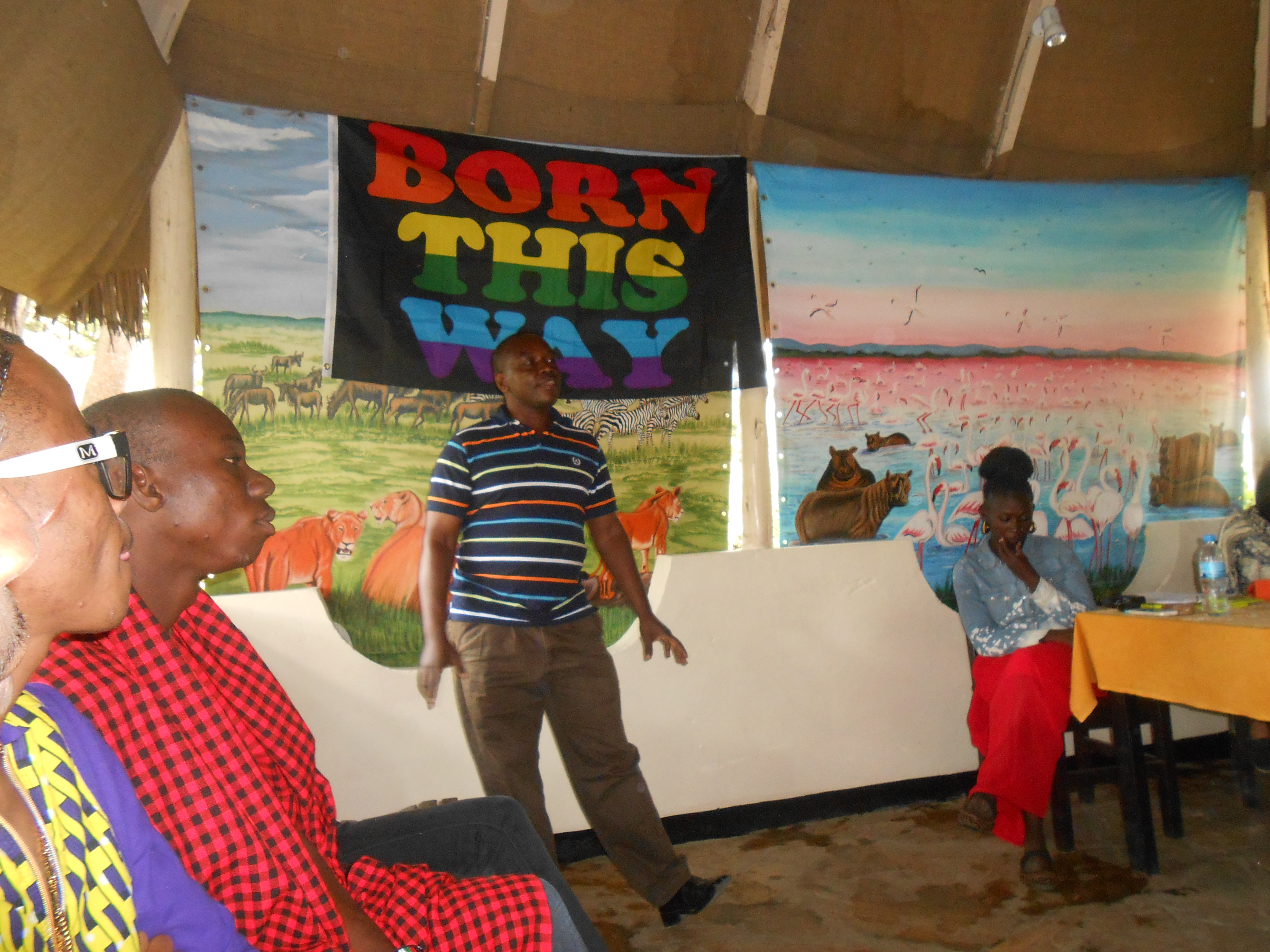
 This AI-generated image demonstrates that others compel us to remain silent.
What happens after an LGBTQ+ person comes out?
This is a question we do not ask enough.
We often talk about “coming out” as if it is simply a personal decision. Tell your parents. Tell your friends. Be honest about who you are. Live your truth.
But in Tanzania, it is not always that simple.
For some people, coming out brings relief. For others, it can be the beginning of losing everything they know.
You can lose your family.
You can lose your home.
You can lose your education.
You can lose your job.
You can lose friends.
You can lose your community.
And sometimes, you can even put your life at risk.
After many years of working with LGBTQ+ people in Tanzania, I have learned that the danger of coming out is not only about the insults and hatred that people may face. The real danger is what happens when rejection starts a chain reaction that affects every part of someone’s life.
This is the conversation I believe we need to have.
It can start with the people you trust most
For most people, family is supposed to be the first place of safety.
When you are sick, you call your mother.
When you have a problem, you go to your father.
When you need help, you turn to your brothers, sisters, aunties, uncles and relatives.
But what happens when the same people you expect to protect you become the people you are afraid of?
I have seen how quickly things can change when a family discovers that their son, daughter, brother or sister is LGBTQ+.
Sometimes there is no conversation.
No one asks, “What happened?”
No one asks, “How are you feeling?”
No one asks, “How can we help you?”
The rejection comes immediately.
“You have brought shame to this family.”
“You are a bad influence.”
“You have destroyed our name.”
“People will laugh at us.”
“Get out of this house.”
For a person who has spent years hiding and finally gathers the courage to tell the truth, hearing these words from your own family can be devastating.
And in some families, particularly where religion, tradition and family reputation are very strong, the consequences can become much more serious.
I remember a lawyer telling me something that I have never forgotten:
“They killed my uncle.”
That sentence tells us something about the level of fear that can exist around sexual orientation and gender identity.
I am not saying every family will respond this way. They do not.
But we cannot pretend that the possibility of serious violence does not exist.
This is why I have a problem when people simply tell LGBTQ+ people, “You should come out.”
Come out to whom?
Where?
When?
And what happens if the person you tell decides that you no longer belong in their family?
Those questions matter.
When your family rejects you, everything can fall apart
Family rejection is not only about feelings.
It can affect your entire life.
Imagine you are a student and your parents discover that you are LGBTQ+.
They stop paying your school fees.
They tell you to leave the house.
You have nowhere to sleep.
You have no money for food.
You cannot pay for transport.
You cannot buy school materials.
Your education, which was supposed to be your path to a better future, suddenly becomes impossible.
This is not a theoretical situation.
For some young people, this is what happens.
And once education stops, the consequences can continue for many years.
You may have wanted to become a teacher, a doctor, a lawyer, an entrepreneur or something else.
But now you are not thinking about your career.
You are thinking about where you will sleep tonight.
That is how rejection can change the direction of a person’s life.
“You don’t fit anywhere”
And the rejection does not always stop with the family.
It follows you.
You go to your neighbourhood and people call you names.
You go to school and people insult you.
You go to work and someone starts a rumour about you.
You attend a religious gathering and suddenly you are treated differently.
You make friends and you become afraid of trusting them.
People begin saying that you are a bad influence.
Some will use abusive words.
Others will laugh at you.
Some will tell other people about your identity without your permission.
Eventually, you can reach a point where you start asking yourself:
Where do I belong?
You do not feel accepted at home.
You do not feel safe at school.
You do not feel secure at work.
You do not know who you can trust.
You start living carefully.
You watch what you say.
You watch what you post.
You watch who you meet.
You become afraid of your own phone.
You become afraid that someone will expose you.
This is a very difficult way to live.
The trauma is more than one incident
When we talk about violence, we sometimes imagine only physical violence.
But trauma does not always begin with someone hitting you.
Sometimes trauma comes from living every day expecting something bad to happen.
You are always asking yourself:
Who knows about me?
Who might tell my family?
Who might expose me?
Who might report me?
Who might use this information against me?
Who might refuse me a job?
Who might refuse me a room to rent?
Who might attack me?
Who can I trust?
This constant fear changes you.
You may stop trusting people.
You may isolate yourself.
You may become anxious every time your phone rings.
You may find it difficult to sleep.
You may lose concentration at school or work.
You may feel that there is no future.
Research in Tanzania has documented significant levels of violence against men who have sex with men. One study involving 345 participants reported high levels of emotional, physical and sexual violence, alongside significant mental-health concerns. Another study across six Tanzanian cities documented widespread experiences of verbal abuse and discrimination or humiliation linked to sexuality or gender roles.
These studies are important, but behind every percentage is a person.
A person who went home that evening.
A person who had to wake up the next morning.
A person who still had to find food.
A person who still had to go to work.
A person who still had to pretend that everything was okay.
Then there is the law
There is another reality that cannot be ignored.
Tanzania’s Penal Code continues to criminalize certain same-sex sexual conduct. Sections 154 and 157, among others, remain part of the legal framework governing “unnatural offences” and certain forms of “gross indecency.”
This matters.
It means that LGBTQ+ people are not only dealing with family and community attitudes. They are also living in a legal environment where aspects of their private lives can carry criminal consequences.
And this creates another layer of fear.
Imagine that someone has been attacked because people believe they are LGBTQ+.
The normal response should be to seek protection.
But what if the person is afraid of being exposed?
What if they are afraid that their own identity could become part of the problem?
What if they are afraid that going to the authorities could bring more questions, more exposure or further discrimination?
Then they may decide to remain silent.
And when people remain silent, the violence becomes invisible.
The person who attacked them may never be held accountable.
The person who was harmed carries the trauma alone.
That is one of the problems with criminalization and stigma: they can make people afraid to seek help.
The economy does not allow you to breathe
There is another part of this conversation that we do not discuss enough.
Money.
You cannot eat human rights.
You cannot pay rent with dignity alone.
You cannot continue your education without school fees.
You cannot leave an unsafe home without somewhere else to go.
Economic independence matters.
When your family rejects you, you may lose financial support.
When you lose financial support, you may lose your home.
When you lose your home, you become more vulnerable.
When you are vulnerable, people can exploit you.
And when you are trying to survive, it becomes much harder to defend your rights.
This is why LGBTQ+ rights are also economic rights.
The right to work.
The right to education.
The right to housing.
The right to participate in economic life without discrimination.
These things are connected.
The UN Committee on Economic, Social and Cultural Rights has raised concerns about discrimination affecting LGBT people in Tanzania in areas including employment, healthcare, education and housing.
Again, these are not separate problems.
They are connected.
A young person rejected by their family may lose education.
A person who loses education may struggle to find employment.
A person without employment may struggle to find housing.
A person without housing may become vulnerable to exploitation.
And the cycle continues.
Three stories behind the statistics
At LGBT Voice Tanzania, we have seen different versions of this story.
I will not give people’s names because their safety comes first.
One young person came out to members of his family expecting difficult questions. Instead, the family rejected him. The financial support he depended on disappeared. Suddenly, he was not only dealing with the pain of rejection. He had to think about food, accommodation and how he would continue his life.
Another young person found their education at risk after their identity became known.
Before that happened, their main concern was school and the future.
Afterwards, the questions became very different:
Where will I sleep?
Who will pay my school fees?
Where will I get food?
Who can I trust?
This is what stigma can do. It can take a young person who is thinking about their future and force them to think only about survival.
Then there are those who manage to remain at home and continue working or studying but live with constant fear.
They are careful with their phones.
They are careful about photographs.
They are careful about relationships.
They are careful about who they tell.
They are always afraid that someone will discover the truth and use it against them.
From outside, everything may look normal.
Inside, the person is exhausted.
These are the stories behind the statistics.
Silence is not always safety
I understand why people tell LGBTQ+ people to remain silent.
Sometimes silence is a survival strategy.
I would never tell someone to come out without considering their safety.
If you depend on your parents for housing and food, you have to think carefully.
If you are a student, you have to think carefully.
If you live in an environment where violence is possible, you have to think carefully.
Coming out is a personal decision, and nobody should be forced to disclose their identity.
But we also have to ask ourselves something uncomfortable.
If people must remain silent because telling the truth could cost them their family, education, employment, home or safety, what kind of society have we created?
Silence does not make discrimination disappear.
It only makes it harder to see.
Silence does not stop violence.
It can make violence go unreported.
Silence does not make a young person less LGBTQ+.
It can make that young person more isolated.
And silence does not solve the problem.
We need to change the question
Maybe we have been asking the wrong question.
Instead of asking:
“Why did you come out?”
We should ask:
“Why is coming out so dangerous?”
Why should telling your mother who you are mean losing your home?
Why should telling your father mean losing your education?
Why should being honest with a friend mean becoming the subject of gossip?
Why should someone lose employment because of their sexual orientation or gender identity?
Why should a person have to choose between being honest about themselves and being able to survive?
These questions are not only for LGBTQ+ people.
They are questions for parents.
For teachers.
For religious leaders.
For employers.
For lawyers.
For health professionals.
For community leaders.
For policymakers.
For all of us.
Families can choose differently
Parents may need time.
Families may struggle to understand.
Religious beliefs may influence how someone responds.
Culture and tradition matter to many Tanzanians.
But none of these things requires violence.
None requires humiliation.
None requires throwing someone out of their home.
None requires ending a child’s education.
And certainly none requires killing.
A parent can disagree with their child’s identity and still protect them.
A religious leader can hold a theological position and still reject violence.
A teacher can have personal beliefs and still protect a student from abuse.
A community can have its values and still recognize the dignity of every person.
These things are not impossible.
They require us to put human life before shame.
What kind of Tanzania do we want?
I am not asking every LGBTQ+ person to come out publicly.
That would be irresponsible.
I am asking something different.
I am asking why someone should have to calculate the risk of losing their family before they can tell their mother who they are.
I am asking why a student should fear losing their education.
I am asking why someone should be afraid that their employer will discover their identity.
I am asking why a person who experiences violence should be afraid to seek protection.
And I am asking why we continue to place so much responsibility on the person experiencing discrimination rather than asking society to become safer.
We need families that listen before they reject.
We need schools where students can learn without being humiliated.
We need workplaces where people’s ability to contribute matters more than prejudice.
We need confidential and accessible psychosocial support.
We need protection from violence.
We need access to justice.
We need economic opportunities.
And we need to have an honest conversation about laws that criminalize consensual same-sex relationships between adults.
What can you do?
An article like this should not end with people simply feeling sorry for the people described in it.
We need action.
If you are a parent, listen before you reject your child.
If you are a teacher, protect the student in front of you.
If you are a religious leader, you can hold your beliefs without encouraging violence, humiliation or abandonment.
If you are an employer, create a workplace where people can earn a living without discrimination.
If you are a lawyer, consider how you can help someone who has been denied justice.
If you are a health or psychosocial professional, create a space where people can seek support confidentially and without judgment.
If you are a researcher, document these experiences responsibly and protect the people whose stories you tell.
If you are an ally, do not only say, “I support you.” Ask what practical support looks like.
And if you are able to give financially, please support organizations working directly with LGBTQ+ people in Tanzania.
At LGBT Voice Tanzania, we encounter people whose needs cannot wait for a large project or a future grant.
Someone may need urgent legal assistance.
Someone may need temporary accommodation after being rejected by their family.
Someone may need basic necessities after losing their source of support.
Someone may need trauma-informed psychosocial support after violence or rejection.
Sometimes a relatively small contribution can help someone get through the most difficult days of their life.
Your donation can help keep a person from facing that crisis alone.
We are not asking you to save everyone.
We are asking you to help us reach the person who needs support today.
Donate. Share this article. Introduce us to a foundation, church, community organization or individual donor who may be willing to support this work.
If you cannot give money, give your voice.
Talk about this issue.
Challenge harmful stereotypes.
Listen to LGBTQ+ people.
Share credible information.
And when you see discrimination or violence, do not pretend that you did not see it.
If we remain silent, what do we expect?
This is the question I keep coming back to.
If we remain silent about this, what do we expect to change?
How many more young people must lose their education?
How many must leave their homes?
How many must lose their livelihoods?
How many must live with trauma without anyone knowing?
How many must hide their identity from the people they love?
How many must become homeless?
How many must experience violence before we stop calling this a private family matter?
How many people must suffer before we accept that this is a human rights issue?
We cannot keep telling people to hide and then wonder why they are struggling.
We cannot tell people to remain silent and then claim that everything is peaceful.
Sometimes silence is not peace.
Sometimes silence is fear.
Sometimes silence is survival.
And sometimes silence is the reason nobody knows what is happening.
LGBTQ+ Tanzanians are not asking to be treated as more important than anyone else.
They are asking to live.
To study.
To work.
To have a home.
To have a family.
To have friends.
To contribute to their communities.
To seek help when they are in danger.
To live without constantly asking whether telling the truth about themselves could cost them everything.
Coming out should not be a death sentence.
It should not mean homelessness.
It should not mean the end of education.
It should not mean losing your livelihood.
It should not mean losing your dignity.
And it should not mean that you have to disappear from society in order to survive.
So I ask again:
If we remain silent about this, what do we expect?
Silence may make the problem less visible.
But it will never make the problem disappear.
We need to speak.
We need to listen.
We need to act.
And we need to build a Tanzania where nobody has to choose between living honestly and living safely.
That is the Tanzania I want to see.
Stand with someone who has nowhere else to turn
If this article has made you think about someone who may be facing rejection, homelessness, violence, legal problems or severe isolation because of their sexual orientation or gender identity, do not simply scroll past.
Support the work.
Share the message.
Connect us with people and organizations who can help.
And, if you are able, make a donation to LGBT Voice Tanzania so that we can continue providing practical support when people are facing crises.
Your support can help turn “I have nowhere to go” into “someone is here to help me.”
Speak.
Share.
Stand with the community.