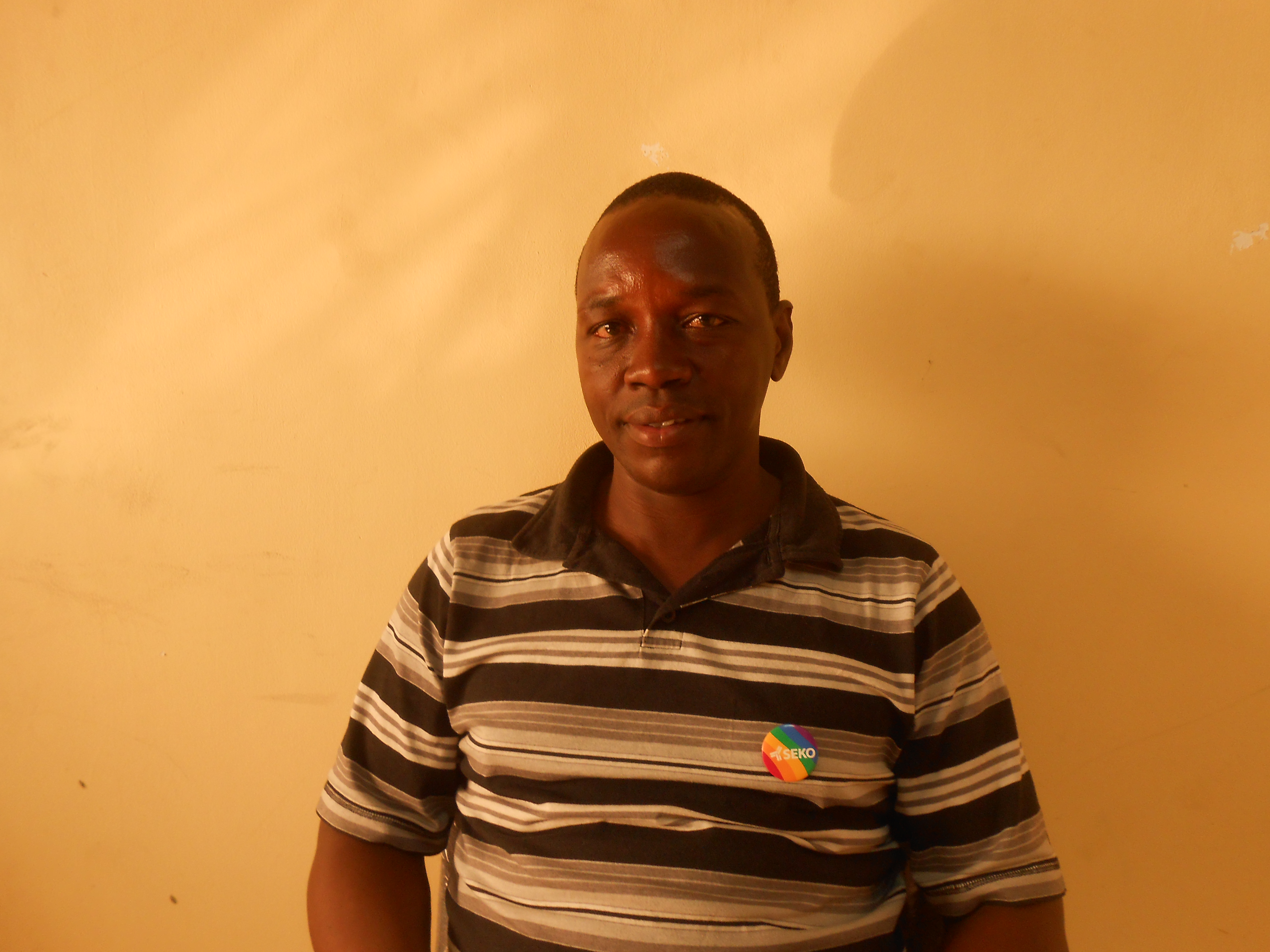
By James Wandera Ouma
For decades, LGBTQ+ Tanzanians have been forced to navigate education, healthcare, employment, family life and public institutions while carrying the burden of invisibility. But invisibility does not make people disappear. It only makes their suffering easier to ignore.
There is a particular kind of violence that does not leave a visible wound.
It is the violence of being told that you do not exist.
It is the violence of being forced to hide.
For an LGBTQ+ young person in Tanzania, hiding can begin at school. A rumor can become bullying. Bullying can become expulsion. Expulsion can mean losing the opportunity to complete an education.
At home, disclosure can mean rejection. Rejection can mean homelessness. Homelessness can create vulnerability to exploitation, violence and survival sex.
At work, suspicion can mean dismissal or exclusion.
At a health facility, fear of being exposed can mean avoiding treatment altogether.
And when violence occurs, fear of the law can prevent victims from seeking justice.
These experiences are connected.
They are not isolated incidents.
They are the consequences of a system in which criminalization, stigma and social exclusion reinforce one another.
And they raise a fundamental question:
What happens to a country when some of its citizens are forced to become invisible in order to survive?
We are here
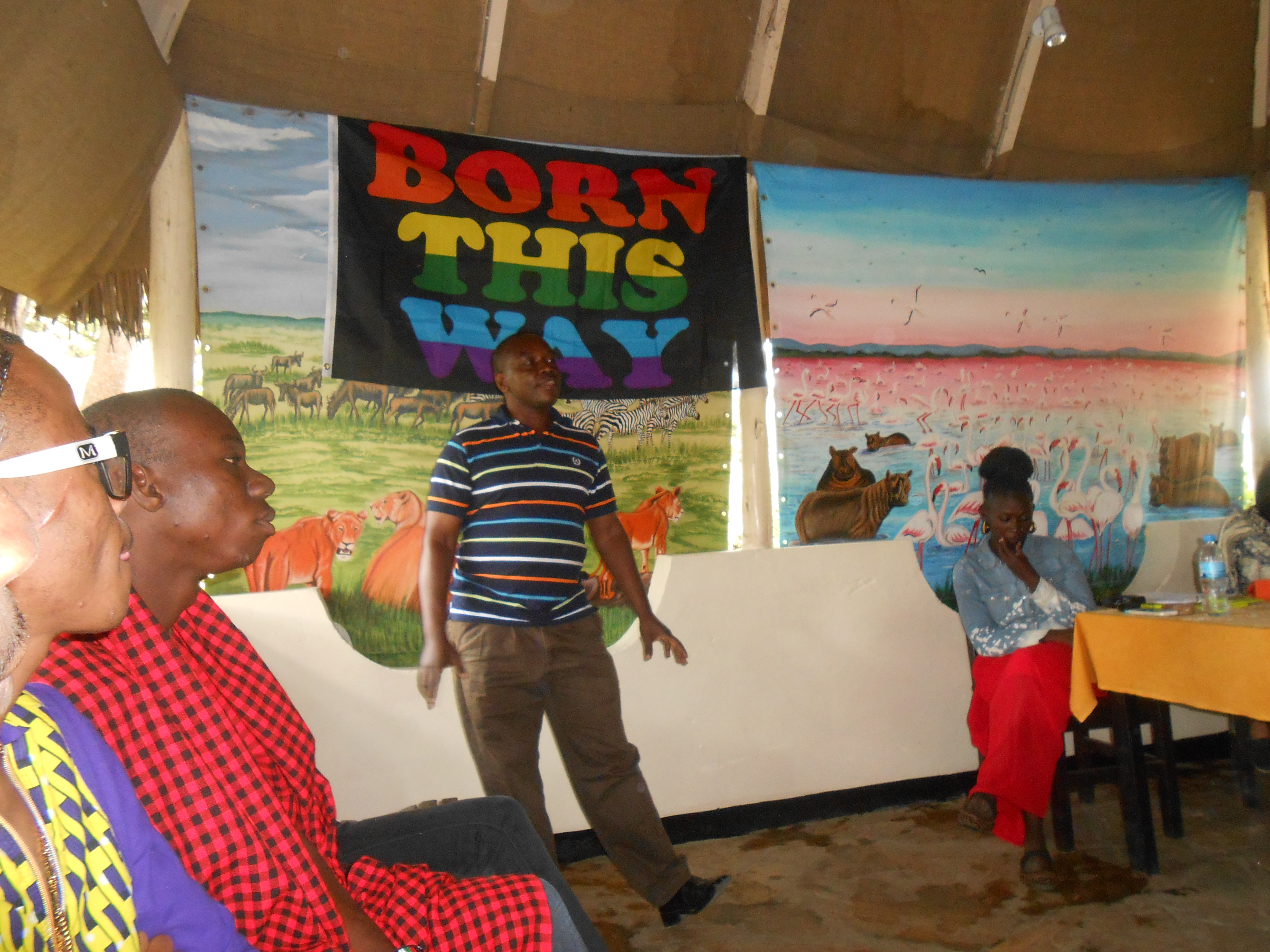
I have spent decades working with LGBTQ+ people in Tanzania.
During that time, I have seen many forms of suffering.
I have helped people find safe places to live.
I have helped people relocate when remaining in their communities became unsafe.
I have helped people obtain food when they had nothing.
I have helped young people with school fees.
And I have encouraged people who were at the point of giving up simply because they needed someone to remind them that their lives had value.
I have learned that sometimes a person does not need a speech.
They need a safe room.
Sometimes they need food.
Sometimes they need school fees.
Sometimes they need legal support.
And sometimes they simply need another human being to say:
“You are not alone.”
These experiences have shaped my conviction.
After decades of witnessing this, I refuse to remain silent.
Not because I expect everyone to agree with me.
But because I believe that LGBTQ+ Tanzanians are human beings and citizens who deserve to exist, to be seen, to be respected and to be protected.
The evidence cannot be ignored
In 2023–2024, LGBT Voice Tanzania conducted a community-based study involving 367 LGBTQ+ people across 15 regions of Tanzania.
The study examined lived experiences in education, healthcare, employment, housing, safety and mental health. Participants were between 18 and 40 years old and included people from both urban and rural communities.
The findings are difficult to ignore.
41% of participants had been expelled or forced to leave school because of their sexual orientation or gender identity.
71% avoided healthcare because of fear of discrimination.
One in five reported being denied healthcare.
In formal employment, only 1% of trans women and 2% of gay men in the study reported being employed.
And 79% experienced discrimination or violence.
These figures should not be treated simply as advocacy statistics.
They represent people.
A 19-year-old student whose future was interrupted after a rumor spread about his sexuality.
A transgender woman who sought medical treatment but was humiliated and turned away.
A gay man who lost employment because of assumptions about his identity.
A person who was threatened by police and did not report the abuse because they feared what would happen if they approached the authorities.
These are human experiences.
And they tell us something important about the society in which we live.
When education becomes conditional
Education is supposed to expand a person’s future.
For LGBTQ+ young people, however, education can become another site of exclusion.
Our study found that many participants experienced bullying, harassment, public humiliation and exclusion within educational institutions. Some were expelled after being outed or accused of violating school norms.
One participant described being a top student before being expelled after a rumor that he liked other boys.
He was 19.
His parents refused to fight for him.
He was left with nothing to do instead of finishing school.
We need to understand what this means beyond the individual.
When a student is expelled because of identity, Tanzania loses potential.
We lose education.
We lose skills.
We lose future workers and professionals.
We lose entrepreneurs, teachers, health workers, researchers and community leaders.
Discrimination does not only hurt the person being discriminated against.
It impoverishes society.
When healthcare becomes frightening
Healthcare should be a place where people can tell the truth without fear.
Yet our research found that 71% of participants avoided healthcare services because of fear of discrimination. Participants described humiliation, aggressive questioning, denial of services and other forms of mistreatment.
Think about what that means.
Someone becomes sick.
They need medical attention.
But instead of asking, “Where can I get treatment?”, they first ask:
“Will I be safe if I go there?”
That question should never have to be asked.
Fear of healthcare has consequences beyond LGBTQ+ communities. It undermines trust in health systems and makes it more difficult for public-health programs to reach populations that may already face significant barriers.
A health system cannot serve people effectively if people are afraid to use it.
When work becomes survival
Employment should provide dignity, independence and economic security.
For many LGBTQ+ Tanzanians, however, discrimination makes formal employment extremely difficult.
Our study found particularly severe exclusion among trans women and gay men, with only 1% of trans women and 2% of gay men reporting formal employment. Many participants relied on informal work or other survival strategies.
This has a wider economic consequence.
When people cannot access employment, they become more economically vulnerable.
When economic vulnerability increases, dependence and exploitation increase.
When young people lose both education and employment opportunities, homelessness becomes more likely.
And when people have no safe economic alternatives, some are pushed into survival strategies they would not otherwise choose.
Poverty is therefore not separate from discrimination.
Discrimination can create poverty.
When the police are the people you fear
Perhaps one of the most serious consequences of criminalization is the erosion of trust between LGBTQ+ people and law-enforcement institutions.
Our study documents experiences of arrest, harassment, blackmail, extortion and threats. Participants described situations in which the criminalization of same-sex relations created opportunities for abuse because people feared being exposed or arrested.
One participant described being stopped by police officers who threatened him with imprisonment and forced him to surrender the money he had.
His question was simple:
“Who would protect me from the police themselves?”
That question should concern everyone.
Because when citizens cannot safely seek protection from the institutions responsible for providing it, the problem is no longer confined to one community.
It becomes a question about the rule of law.
The cost of family rejection
For many LGBTQ+ people, the first institution they encounter is not the state.
It is the family.
And family rejection can be devastating.
Participants described being disowned, evicted from their homes and attacked by relatives or neighbors. LGBTQ+ youth were particularly vulnerable to homelessness and survival sex.
A young person who loses their family home does not suddenly stop needing food.
They do not stop needing education.
They do not stop needing healthcare.
They simply become more vulnerable.
This is why safe housing, emergency assistance, psychosocial support and livelihood programs are not peripheral services.
For some people, they are the difference between surviving and not surviving.
But there is another story: resilience
It would be a mistake to tell this story only through suffering.
The same study that documents discrimination also documents resilience.
When biological families reject people, LGBTQ+ people often create chosen families.
They share food.
They provide temporary accommodation.
They help each other pay medical bills.
They create peer-support networks.
They establish community shelters.
They develop small businesses.
They organize.
They create art.
They advocate.
They continue living.
The report describes this community resilience as a source of power and dignity, emphasizing that grassroots solutions are already working despite limited resources.
This matters enormously.
LGBTQ+ Tanzanians should not be viewed only as victims waiting for rescue.
They are agents of change.
They are already solving problems.
What they need is an environment in which those solutions can grow.
We should stop asking whether LGBTQ+ people are “deserving”
One of the most damaging aspects of discrimination is the idea that marginalized people must somehow prove that they deserve dignity.
I reject that premise.
You do not have to prove your economic value before you deserve safety.
You do not have to prove your usefulness before you deserve healthcare.
You do not have to prove your morality before you deserve protection from violence.
And you do not have to convince everyone to agree with your identity before you become worthy of dignity.
Human rights cannot work that way.
If rights belong only to people whom society approves of, they are not rights.
They are privileges.
This is about citizenship
This is why I believe the LGBTQ+ discussion in Tanzania needs to move beyond arguments about sexuality.
It is fundamentally a question of citizenship.
The question is whether a Tanzanian citizen can live, study, work, seek healthcare and participate in society without being denied dignity because of who they are.
Our report identifies a significant gap between constitutional principles of equality and dignity and the lived realities of LGBTQ+ people. It also notes that Tanzania has international human-rights obligations relating to equality, privacy, health, education and work.
We should therefore ask ourselves:
What does equality mean if it does not reach everyone?
What does citizenship mean if some citizens must remain invisible to feel safe?
What does dignity mean if people can be humiliated with impunity?
These are not questions only for LGBTQ+ activists.
They are questions for Tanzania.
To Tanzania: we can disagree without dehumanizing
I understand that Tanzanians hold different religious, cultural and personal beliefs.
I am not asking everyone to think like me.
I am asking for something more fundamental.
Let us disagree without violence.
Let us disagree without expulsion.
Let us disagree without denying healthcare.
Let us disagree without police abuse.
Let us disagree without destroying someone’s future.
A person’s humanity should not depend on whether their identity makes other people comfortable.
You do not have to agree with me to believe I deserve safety.
You do not have to understand LGBTQ+ lives to believe a student deserves an education.
You do not have to share my identity to believe that someone experiencing violence deserves justice.
That is the minimum standard of a society committed to human dignity.
To international allies: listen to local leadership
For international donors, diplomats, journalists, researchers and human-rights organizations, Tanzania presents an important lesson.
The most effective solidarity is not solidarity that speaks over local communities.
It is solidarity that listens.
Listen to the activists working under difficult conditions.
Listen to the young people navigating homelessness.
Listen to people excluded from employment.
Listen to those who are afraid to access healthcare.
Listen to community organizations documenting violations and providing emergency support.
And invest in those communities.
Our report specifically calls for sustained support for grassroots organizations, including funding for legal aid, security, emergency response, safe spaces, psychosocial support, livelihood programs and advocacy.
This is not simply charity.
It is solidarity.
And solidarity should strengthen local leadership rather than replace it.
We are still here
After decades of witnessing these realities, I refuse to remain silent.
I have seen people lose homes.
I have seen education interrupted.
I have seen people afraid to seek healthcare.
I have seen people struggle to find work.
I have seen people forced to relocate simply to remain safe.
But I have also seen courage.
I have seen people rebuild their lives.
I have seen communities become families.
I have seen young people find hope again.
I have seen activists continue organizing when silence would have been easier.
That is why I remain hopeful.
Not because the situation is easy.
It is not.
But because people are still fighting for a better future.
And because change is possible.
The Tanzania I want to see
I want a Tanzania where an LGBTQ+ young person can finish school without fear.
A Tanzania where a person can enter a hospital without wondering whether they will be humiliated.
A Tanzania where a trans woman can seek employment based on her skills and qualifications.
A Tanzania where a person experiencing violence can report it safely.
A Tanzania where families choose compassion over rejection.
A Tanzania where community organizations can provide lifesaving support without intimidation.
A Tanzania where institutions protect citizens equally.
A Tanzania where LGBTQ+ people do not have to disappear in order to belong.
This is not a demand for special privilege.
It is a demand for equal dignity.
We are human.
We deserve to exist.
We deserve to be seen.
We deserve to be respected.
We deserve to be protected.
And we deserve to live like any other Tanzanian—without fear and with the dignity, rights and freedoms that citizenship should provide.
The LGBTQ+ community is not disappearing.
We are not going away.
We are still here.
The question is no longer whether we exist.
The question is whether Tanzania is ready to see us.