
The national discourse surrounding the LGBTQ+ community in Tanzania is tragically misdirected. For far too long, the narrative has been weaponized by fear, condemnation, and the dangerous assertion that the very existence of a subset of our citizens constitutes a “problem” for our society, our culture, or our moral fabric.
We must unequivocally reject this premise.
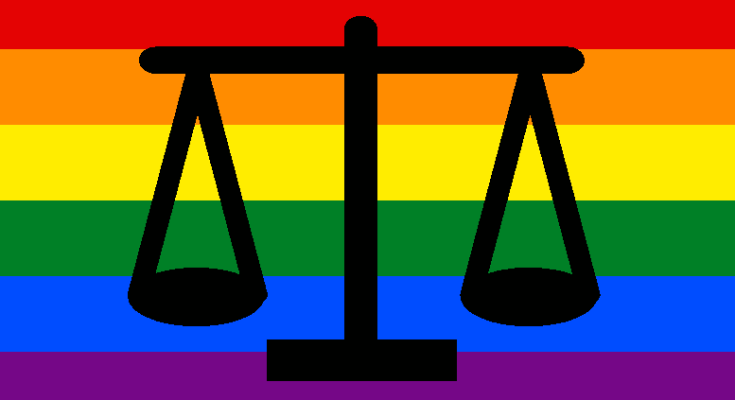
The true challenge facing Tanzania is not diversity; it is exclusion. The crisis is not identity; it is the deliberate and systematic dehumanization of any citizen fueled by hatred. And the solution is not silence or erasure, but the courageous act of upholding the foundational principles that grant this nation its moral integrity: Universal Justice, fundamental Equality, and the unwavering Rule of Law.
This is not merely a plea for tolerance; it is an argument for national self-preservation. Embracing the full measure of human rights is the key to unlocking the democratic promise of our republic.
I. The True Crisis: A Failure of the Constitutional Promise
When we discuss the challenges facing the LGBTQ+ community, we are forced to catalogue the cruel effects of state-sanctioned and societal hate: harassment, arbitrary detention, economic blockade, and the profound mental toll of living in fear. These abuses are not inevitable; they are, quite simply, the symptoms of a profound political and social failure.
The actual problem is the systemic denial of human dignity. It is the calculated practice of treating fellow citizens as less than human, stripping them of their rights, and imposing a perpetual state of vulnerability based solely on an identity they cannot change.
The moment the state or society chooses to exempt one group from the protection of the law—be it on the basis of political affiliation, ethnicity, or sexuality—it severely compromises the social contract for everyone. When rights are treated as conditional privileges, a precedent is established that threatens every citizen’s future security. Where discrimination is permitted to stand, exclusion becomes a corrosive force that weakens the entire democratic structure.
II. The Solution: Upholding the Law, Protecting the Citizen
The path out of this manufactured crisis is not an innovation; it is a fidelity to our founding document. The solution is already enshrined in the very Articles of the Constitution of the United Republic of Tanzania, particularly Article 12 and Article 13, which guarantee the equality of all persons before the law.
The core argument for LGBTQ+ inclusion is not a foreign imposition; it is a sacrosanct Tanzanian Constitutional imperative.
When the government chooses to fully uphold these articles, it is not granting a special favor to a marginalized group; it is performing its essential duty to the nation. The inclusion of LGBTQ+ citizens is the moment the Constitution is finally realized in its highest form: a document that protects the rights of every single person without exception or prejudice.
This shift—from viewing diversity as a political liability to viewing justice as a national mandate—is transformative. It affirms that the rule of law is not a temporary tool for those in power, but an enduring, non-negotiable guardian of the people. As we recently witnessed globally, with the lasting affirmation of equality precedents like $Obergefell \text{ }v.\text{ }Hodges$, rights rooted in inherent dignity cannot be erased by political winds. This is the ultimate lesson for our leaders: True judicial strength lies in permanence and universality.
III. Inclusion as National and Moral Strength
The solution of inclusion provides tangible national and moral dividends that extend far beyond mere tolerance:
1. Strengthening the Rule of Law: By consistently applying the law (Articles 12 and 13) to protect LGBTQ+ citizens from violence and arbitrary detention, the government decisively reinforces the legitimacy and credibility of its own institutions. A state that protects its most vulnerable citizens is a strong state. A state that persecutes them is fundamentally weak and inherently unstable.
2. Unlocking Human Potential: Exclusion drives capable citizens into the shadows. It forces talented, educated, and entrepreneurial people to live in fear, severely hindering their ability to contribute openly to the national economy and social life. When LGBTQ+ individuals are safe and free to live authentically, their talent, innovation, and passion are liberated for the benefit of all Tanzanians. Inclusion is the most profound investment in human capital.
3. Enhancing Democratic Integrity: A healthy democracy is defined by its ability to resolve disagreement without resorting to dehumanization or violence. When the rights of the minority are safeguarded, the political integrity of the entire system is fortified against the dangers of tyranny and authoritarianism. The Legal Agency Pathway—our organization’s effort to provide urgent legal counsel—is necessary today precisely because this democratic promise is fractured. Our work is the relentless pursuit of making the Constitution’s words a lived reality for every persecuted citizen.
IV. The Immediate Evidence of Shared Fate
The violence and repression witnessed in the aftermath of the recent general elections provide the most painful and current evidence of this principle. When security forces disregard the right to peaceful assembly, when public discourse is silenced, and when the safety of protestors is denied, the foundation of every citizen’s liberty cracks. The arbitrary repression that targets political dissidents, journalists, and activists is born from the exact same selective application of the law that targets the LGBTQ+ community.
Our fates are inextricably linked. The struggle for LGBTQ+ dignity is, therefore, not a separate, niche fight; it is a critical, central component of the larger national movement to restore constitutional protection and democratic stability for all Tanzanians. When the state learns to respect the inherent dignity of one marginalized group, it becomes incapable of abusing the rights of any other.
Conclusion: A Demand for Dignity
The moment we stop asking “How do we deal with the problem of LGBTQ+ people?” and start asking “How do we solve the problem of exclusion and injustice?” is the moment our nation truly begins to realize its potential.
We, the LGBTQ+ citizens of Tanzania, are not requesting an exemption from national law or culture; we are demanding that the law and the Constitution be applied equally to us. We are not a problem to be managed; we are a solution to the instability, moral weakness, and systemic injustice that hate creates.
We call on the Tanzanian government and all its leaders to reflect on this profound truth. True national strength, stability, and integrity are achieved not by the number of people you exclude, but by the number of people you resolutely protect.
We are citizens. We are equal. And we demand the dignity and protection guaranteed to every single Tanzanian.